Industrial Real Estate Investing
How warehouse, distribution, and flex industrial assets are evaluated as 1031 replacement property.
Industrial Real Estate Investing - Service Overview & Guide
Industrial real estate spans several distinct property types, including bulk distribution warehouses built for large-scale logistics operations, smaller flex industrial buildings combining warehouse and office space, manufacturing and fabrication facilities built around specific production processes, and last-mile distribution facilities positioned close to dense population centers to support rapid delivery. Each type carries different tenant requirements, building specifications, and lease structures, and an investor evaluating industrial property as 1031 replacement property should understand which subtype a given candidate falls into before comparing it against other industrial or non-industrial options.
Building specifications matter significantly in industrial real estate in a way that is less pronounced in other commercial property types. Clear height, the vertical distance from the floor to the lowest overhead obstruction, directly affects a warehouse's usable storage capacity and its appeal to modern logistics tenants, who generally prefer clear heights of thirty two feet or more for efficient racking systems. Dock door count and configuration, trailer parking capacity, and power capacity for equipment or manufacturing processes are similarly important specifications that can make an older building functionally obsolete for many modern tenants even if the building is structurally sound and well located.
Lease structures and tenant credit in industrial property
Industrial properties are commonly leased under triple net or absolute net structures, similar to retail, shifting most operating costs to the tenant and leaving the landlord with a comparatively passive income stream. Tenant credit quality remains a central underwriting factor, as it does in triple net retail, and an investor should evaluate whether the tenant is a well-capitalized national logistics operator, a regional distributor, or a smaller local manufacturer, since these different tenant profiles carry meaningfully different default and releasing risk over the lease term. Multi-tenant flex industrial buildings introduce additional complexity, since the property's income depends on multiple smaller tenants rather than a single larger lease, spreading risk across tenants but also increasing management complexity relative to a single-tenant distribution building.
Industrial demand in the Oklahoma City, OK corridor
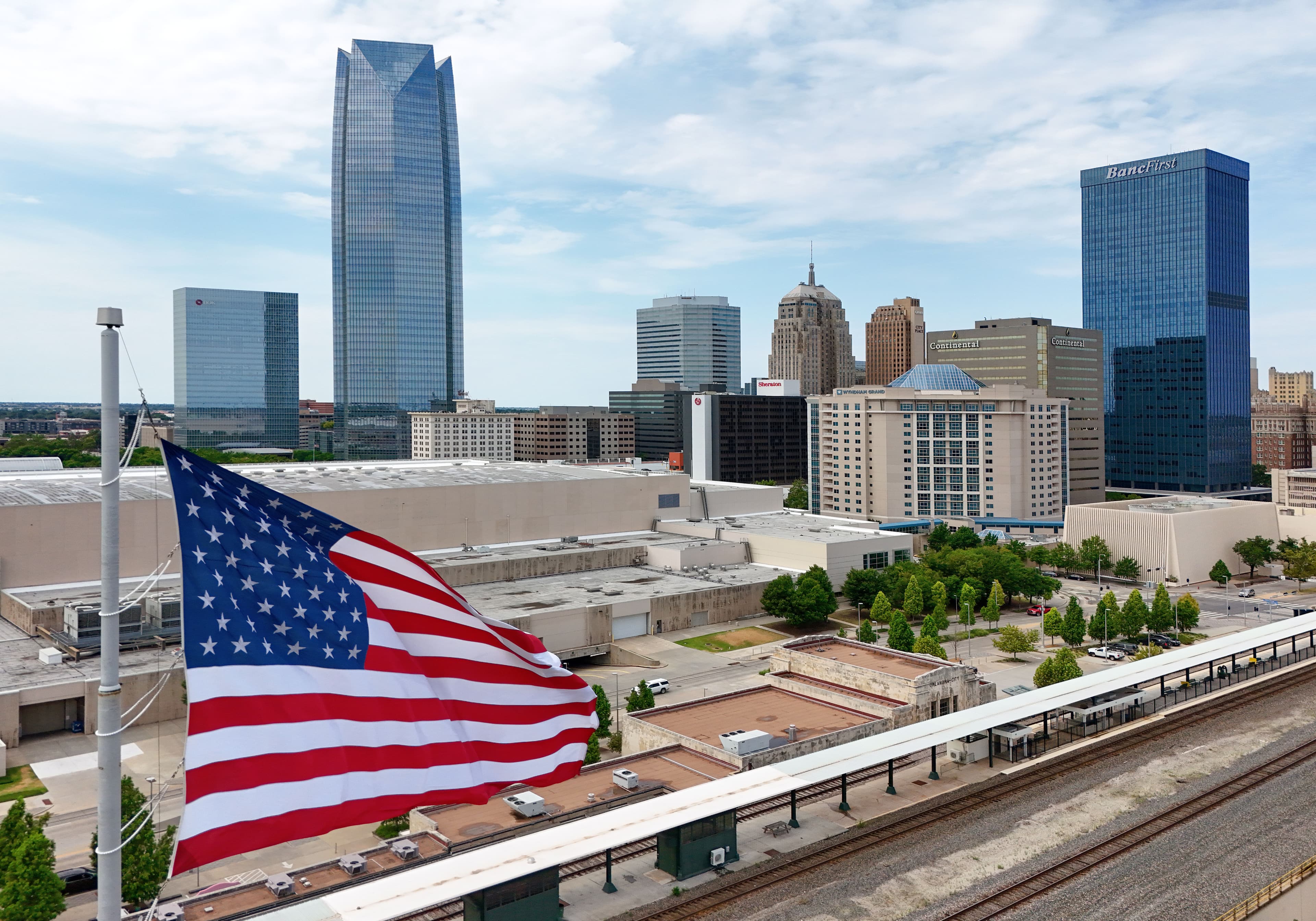
Oklahoma City sits at the crossing of Interstate 35, Interstate 40, and Interstate 44, a logistics position that has supported steady industrial development and leasing activity along these corridors, particularly for distribution and fabrication uses serving both regional and national supply chains. An investor evaluating industrial property in the Oklahoma City metro should compare a candidate building's specifications, clear height, dock configuration, and power capacity, against current tenant demand in its specific submarket, since even well-located industrial buildings can struggle to lease at competitive rates if their physical specifications no longer match what modern logistics and manufacturing tenants require.
Industrial real estate generally qualifies as like-kind replacement property under Section 1031, and the site's Industrial Replacement Properties service helps investors compare building specifications, tenant credit, and lease terms across candidate industrial properties, whether located in the Oklahoma City metro or identified nationwide, ahead of the forty five day identification deadline.
Key Benefits
Expert Guidance
Professional support throughout your exchange process
Deadline Management
Never miss critical 45 and 180 day deadlines
Property Identification
Access to nationwide replacement property options
Documentation Support
Complete paperwork and compliance assistance
QI Coordination
Seamless qualified intermediary relationships
Tax Optimization
Maximize your tax deferral benefits
Our Process
A streamlined approach to help you complete your 1031 exchange successfully.
Initial Consultation
Discuss your exchange goals and timeline
Property Analysis
Evaluate your relinquished property and identify options
Identification Period
Select replacement properties within 45 days
Closing Coordination
Complete acquisition within 180 days
Service Details
What's Included with Industrial Real Estate Investing
| Service Type | Guides |
| Coverage Area | Oklahoma statewide with nationwide property identification |
| Timeline Support | 45-day identification and 180-day closing deadline management |
| Documentation | Complete paperwork preparation and filing support |
| QI Coordination | Qualified intermediary relationship management |
Frequently Asked Questions
What are the main types of industrial real estate available for a 1031 exchange in Oklahoma City, OK?
Industrial property generally includes bulk distribution warehouses, flex industrial buildings combining warehouse and office space, manufacturing and fabrication facilities, and last-mile distribution facilities positioned near dense population centers, each carrying different tenant requirements and building specifications.
Why does clear height matter for an industrial property acquisition?
Clear height, the vertical distance from the floor to the lowest overhead obstruction, directly affects a warehouse's usable storage capacity. Modern logistics tenants generally prefer clear heights of thirty two feet or more for efficient racking systems, and older buildings with lower clear heights can be functionally obsolete for many tenants.
How does tenant credit affect industrial property underwriting?
Tenant credit quality is a central underwriting factor, similar to triple net retail, since it directly affects the reliability of the income stream. Investors should evaluate whether a tenant is a well-capitalized national logistics operator, a regional distributor, or a smaller local manufacturer before finalizing an acquisition.
Why is Oklahoma City well positioned for industrial real estate investing?
Oklahoma City sits at the crossing of Interstate 35, Interstate 40, and Interstate 44, a logistics position that has supported steady industrial development and leasing activity along these corridors for distribution and fabrication uses serving both regional and national supply chains.
Related Services
Capital Gains Tax on Rental Property
How gain on a rental property is calculated, and how a 1031 exchange can defer the tax bill.
Capital Gains Tax on Inherited Property
How the stepped-up basis rule changes gain on inherited real estate, and when an exchange still helps.
Passive Real Estate Income
What passive real estate income actually means, and which structures qualify for 1031 treatment.
What Is an NNN Lease
A plain-law breakdown of net, double net, and triple net lease structures.
How to Reduce Capital Gains Tax
A plain-law survey of the legitimate ways to reduce or defer capital gains tax on real estate.
Reverse 1031 Exchange Explained
How the exchange-first structure works under the IRS safe harbor, in plain law terms.
Work With Us
Ready to get started with industrial real estate investing? Our team is here to help you navigate your 1031 exchange with confidence. Contact us today.
Contact Us