Multifamily Investing
The fundamentals of multifamily real estate investing, from unit count classifications to financing.

Multifamily Investing - Service Overview & Guide
Multifamily real estate generally refers to residential property containing more than one rental unit, ranging from a small duplex or fourplex to garden-style apartment communities and larger mid-rise or high-rise buildings. Financing, management complexity, and investor pools differ meaningfully across this range, with properties of four units or fewer generally eligible for residential-style financing, while properties of five units or more are generally financed and underwritten as commercial real estate, evaluated primarily on net operating income and debt service coverage rather than the borrower's personal income.
Multifamily properties generate income from a larger number of individual leases than most other commercial property types, which spreads vacancy risk across many tenants rather than concentrating it in one or two large leases, as a single-tenant retail or industrial property would. This diversified tenant base is one of the primary appeals of multifamily investing, since the loss of a single tenant in a fifty-unit building has a much smaller proportional effect on total income than the loss of the sole tenant in a single-tenant net lease property. The tradeoff is that multifamily properties generally require more active, ongoing management, including regular tenant turnover, leasing, and maintenance coordination, compared to a triple net leased property where the tenant handles most of these responsibilities directly.
Evaluating a multifamily acquisition
Investors evaluating a multifamily property should review trailing twelve month financial statements, a current rent roll showing each unit's lease terms and rental rate, and physical condition reports covering major systems such as roofing, HVAC, and plumbing, since deferred maintenance on a multifamily property can represent a substantial future capital obligation that is not always obvious from a quick property tour. Comparing a property's current rents against comparable properties in the same submarket also helps identify whether there is room to increase income through lease-up of under-market units, a common value-add strategy in multifamily investing, or whether the property is already operating at or near market rents.
Oklahoma City, OK multifamily submarkets
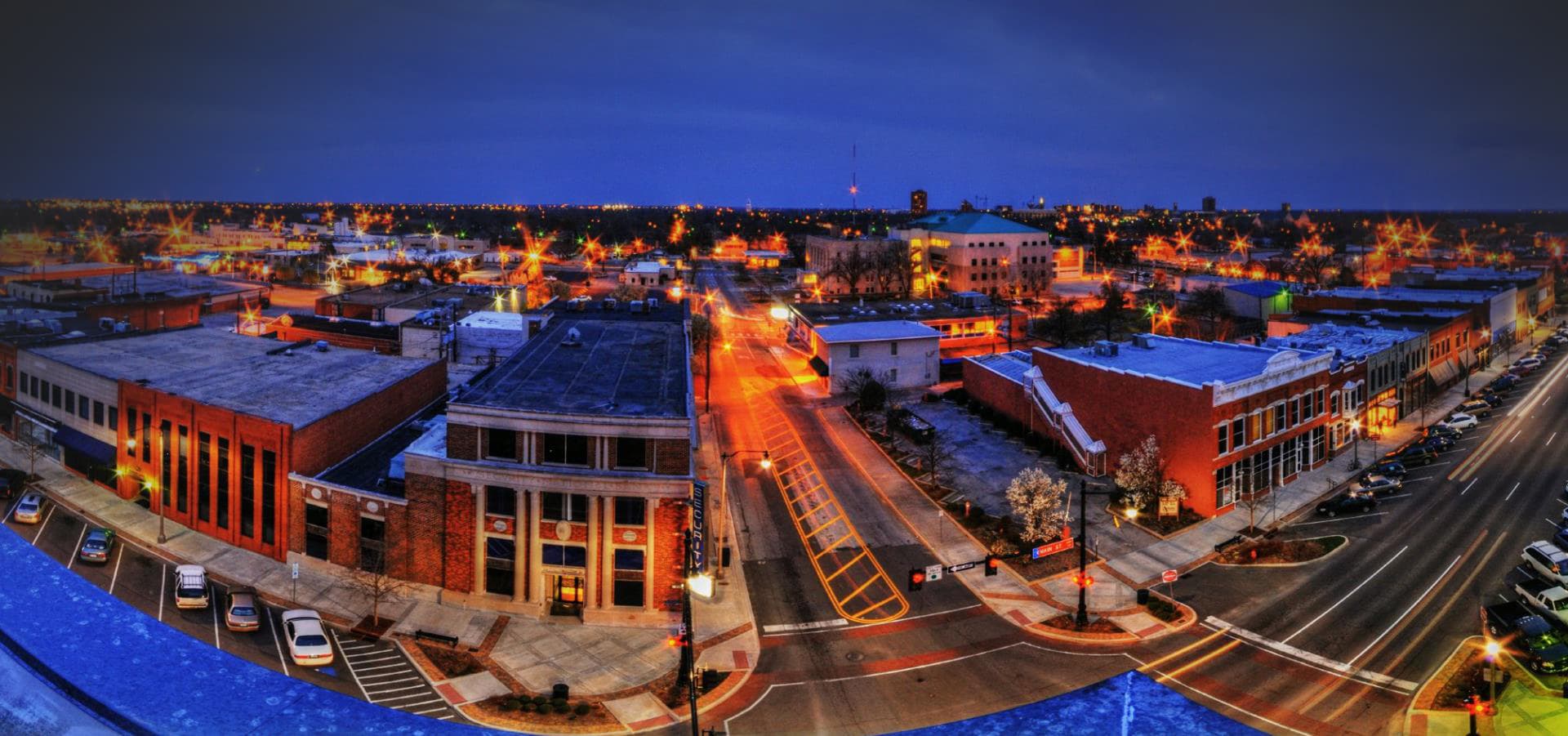
Oklahoma City's multifamily market spans a range of submarkets, from urban infill product in Midtown, Uptown, and the areas surrounding downtown, to garden-style apartment communities throughout the broader metro, including Edmond, Norman, Moore, and the suburban corridors along Interstate 35 and Interstate 40. Population growth, employment trends tied to major local employers, and new multifamily supply under construction all affect rent growth and occupancy trends at the submarket level, and an investor identifying a multifamily replacement property should review these local dynamics for the specific submarket rather than relying on citywide averages, since performance can vary meaningfully between an urban infill property and a suburban garden-style community even within the same metro area.
Multifamily properties generally qualify as like-kind replacement property under Section 1031, and investors exchanging into or out of multifamily should work through standard timeline and boot considerations given the property type's typically larger transaction size and financing complexity. The site's Multifamily Replacement Properties and Lender Coordination services help investors evaluate multifamily candidates and coordinate financing ahead of the one hundred eighty day closing deadline.
Key Benefits
Expert Guidance
Professional support throughout your exchange process
Deadline Management
Never miss critical 45 and 180 day deadlines
Property Identification
Access to nationwide replacement property options
Documentation Support
Complete paperwork and compliance assistance
QI Coordination
Seamless qualified intermediary relationships
Tax Optimization
Maximize your tax deferral benefits
Our Process
A streamlined approach to help you complete your 1031 exchange successfully.
Initial Consultation
Discuss your exchange goals and timeline
Property Analysis
Evaluate your relinquished property and identify options
Identification Period
Select replacement properties within 45 days
Closing Coordination
Complete acquisition within 180 days
Service Details
What's Included with Multifamily Investing
| Service Type | Guides |
| Coverage Area | Oklahoma statewide with nationwide property identification |
| Timeline Support | 45-day identification and 180-day closing deadline management |
| Documentation | Complete paperwork preparation and filing support |
| QI Coordination | Qualified intermediary relationship management |
Frequently Asked Questions
How is multifamily financing different for properties of four units versus five or more?
Properties of four units or fewer are generally eligible for residential-style financing based partly on the borrower's personal income. Properties of five units or more are generally underwritten as commercial real estate, evaluated primarily on the property's net operating income and debt service coverage ratio.
Why do investors value the diversified tenant base of multifamily property?
Multifamily properties spread vacancy risk across many individual leases, so the loss of one tenant has a much smaller proportional effect on total income than the loss of the sole tenant in a single-tenant net lease property. This diversification is a primary appeal of multifamily investing.
What should an investor review before acquiring a multifamily property in Oklahoma City, OK?
Trailing twelve month financial statements, a current rent roll, and physical condition reports covering major building systems are generally essential, since deferred maintenance can represent a substantial future capital obligation not always visible during a quick property tour.
Do multifamily submarkets in Oklahoma City perform similarly across the metro?
Not necessarily. Population growth, local employment trends, and new supply under construction affect rent growth and occupancy differently across submarkets, from urban infill areas near downtown to suburban garden-style communities in Edmond, Norman, and Moore, so submarket-specific research generally matters more than citywide averages.
Related Services
Capital Gains Tax on Rental Property
How gain on a rental property is calculated, and how a 1031 exchange can defer the tax bill.
Capital Gains Tax on Inherited Property
How the stepped-up basis rule changes gain on inherited real estate, and when an exchange still helps.
Passive Real Estate Income
What passive real estate income actually means, and which structures qualify for 1031 treatment.
What Is an NNN Lease
A plain-law breakdown of net, double net, and triple net lease structures.
How to Reduce Capital Gains Tax
A plain-law survey of the legitimate ways to reduce or defer capital gains tax on real estate.
Reverse 1031 Exchange Explained
How the exchange-first structure works under the IRS safe harbor, in plain law terms.
Work With Us
Ready to get started with multifamily investing? Our team is here to help you navigate your 1031 exchange with confidence. Contact us today.
Contact Us